R-22 vs R-410A vs R-454B — A 2026 Refrigerant Guide
AC refrigerants changed in 2025. Here's what LA homeowners need to know about R-22, R-410A, R-32, and R-454B — plus how it affects repair-or-replace decisions.
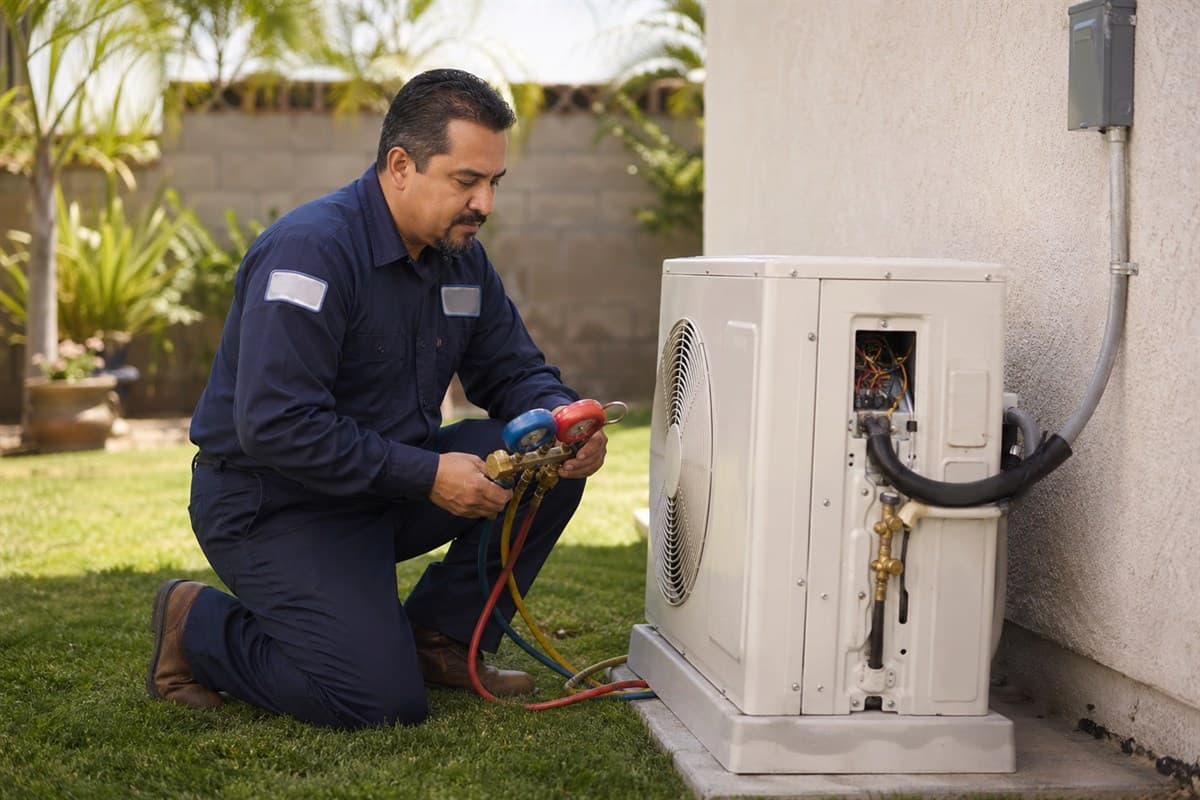
The AC refrigerant landscape changed significantly in 2025, and the change affects every LA homeowner with a system more than a few years old. Here's what's actually happening, in plain language.
R-22 (Freon)
R-22 was the standard residential AC refrigerant from the 1950s until the EPA phase-out under the Clean Air Act. New equipment using R-22 has not been manufactured since 2010. Existing systems can still be serviced, but only from existing stockpiles — and prices have risen substantially as supply tightens.
If your system was installed before 2010, it likely uses R-22. Current pricing in Los Angeles is $150–$250 per pound. A typical refrigerant leak repair on an R-22 system can cost $600–$1,800 just for the refrigerant.
R-410A (Puron)
R-410A replaced R-22 as the residential standard from roughly 2010 through 2024. As of January 1, 2025, R-410A is prohibited from new production and import under the AIM Act, due to its high global warming potential.
R-410A remains available for servicing existing equipment from existing stockpiles, but supply will tighten over the coming years and prices will rise. Current LA pricing is $60–$120 per pound.
If your system uses R-410A and is in good condition, no immediate action is needed. The refrigerant is still serviceable. Plan for the eventual transition during your next system replacement decision.
R-32 and R-454B (Puron Advance)
These are the refrigerants used in residential equipment manufactured for sale in 2025 and beyond. Both have substantially lower global warming potential than R-410A and meet current EPA requirements.
R-32 is more common in ductless mini split systems. R-454B is more common in central split systems and heat pumps.
Both refrigerants are mildly flammable (A2L classification), which has driven equipment design changes — slightly modified line sets, leak detection requirements, and updated installation practices. Properly installed equipment is safe; this affects how it gets installed, not how it operates.
What This Means for Your Repair-or-Replace Decision
R-22 system with a major leak. Replacement increasingly makes sense, particularly on systems over 12 years old. The combination of high refrigerant pricing and the need to eventually transition makes a strategic replacement more attractive.
R-410A system in good condition. No urgency. Continue normal service. Replace when the system reaches end of life or develops a major component failure.
R-410A system with a major leak on equipment over 12 years old. Run the math both ways. The refrigerant is available, but the system is approaching end-of-life regardless. A new R-32 or R-454B system installed now starts your 15-year clock with current refrigerant.
Already on R-32 or R-454B. No action needed. These refrigerants will be in production and available for the foreseeable future.
The Bottom Line for Los Angeles Homeowners
If your system was installed before 2010 and develops a major problem, replacement enters the conversation faster than it did five years ago. If your system was installed between 2010 and 2024, normal service economics still apply — refrigerant is available, and there's no urgency to replace until standard end-of-life signals appear.
When installing a new system, you don't have a choice — current refrigerants are R-32 or R-454B. Both are reliable and well-supported by major manufacturers.
Frequently Asked Questions
Related Pages
Get a Free Estimate Today
Talk to a licensed C-20 technician — no pressure, honest answers.